Stray dog rescue

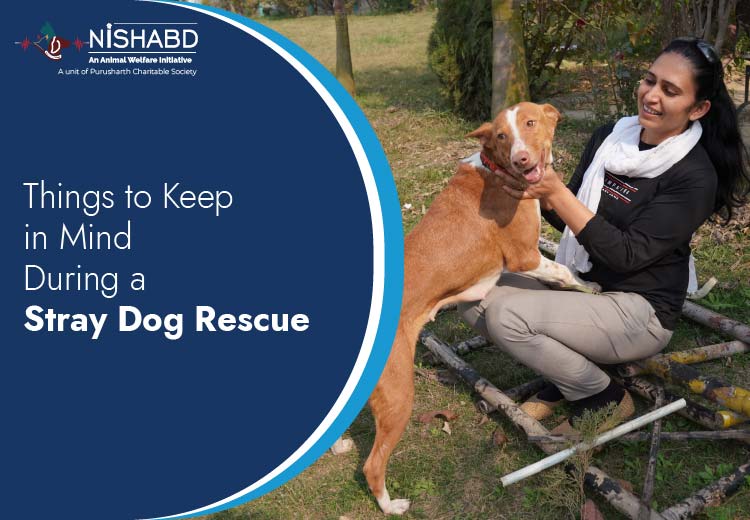
Things to Keep in Mind During a Stray Dog Rescue

Sometimes being kind starts with simply noticing that someone needs help. On busy roads and quiet corners, many dogs struggle every day to survive. Some are healthy and independent, while others might be scared, injured, or even hungry. When we see a dog in pain, we feel like helping it. But helping a stray dog needs patience, care, and the right way so that both the dog and the person stay safe.

Helping a stray dog is a very kind thing to do, but it should always be done carefully and responsibly.

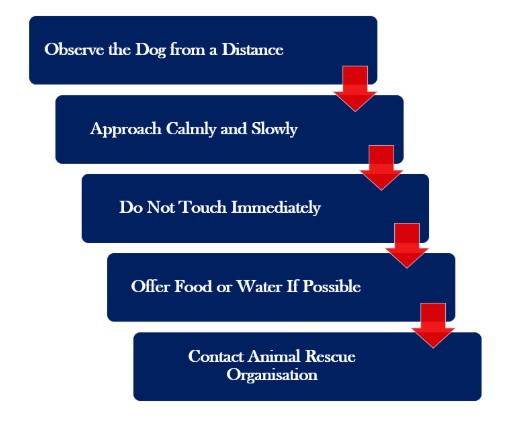
Stray dog rescue1. Stay Calm and Observe the Situation

Before approaching a stray dog, it is essential to first observe its behaviour. Sometimes dogs are traumatised and might react defensively because they are frightened.

Look for the signs like:

  • Limping or any other visual injuries
  • Difficulty in walking or standing
  • Breathing issues or weakness
  • Aggressive or fearful behaviour

Understanding the condition of the dog can help you decide the best way to go ahead in the procedure of a stray dog rescue.

2. Approach Slowly and Gently

A scared dog may not trust a new person quickly. Loud sounds or fast movements can make the dog feel more scared.

While going near a stray dog:

  • Walk slowly and stay calm
  • Do not make sudden movements
  • Talk to the dog in a soft and gentle voice
  • Do not force the dog to come out if it is hiding

These small steps can help the dog feel safe and slowly start trusting you.

3. Avoid Direct Physical Contact Immediately

While our first instinct would be to comfort the injured dog, but, touching it immediately can sometimes make the situation worse. The dog might bite or scratch you out of fear.

During the stray dog rescue, it’s better to:

  • Let the dog be comfortable around you
  • Drinking food or water can help it to be calm
  • Stay at a proper distance until the professionals arrive

These steps are important for both the dog and the rescuer.

4. Contact Animal Rescue Organizations

It’s the most important thing to do. Contact professionals who have been trained to deal with such situations. Organizations for animal rescue have tools, experience and knowledge to effectively help and treat dogs that have been injured, abandoned, or are sick.

Instead of handling all the things on your own, calling a dog shelter in Noida can make sure that the animal gets proper attention and medical care as soon as possible.

5. Provide Temporary Comfort If Possible

In the meantime, while waiting for the rescue team to arrive, small acts of kindness can make a huge impact.

You can try:

  • Offer clean drinking water
  • Keep the food nearby
  • Provide a shade if a dog’s been sitting out in too much heat and sunlight
  • Keep the area calm and safe

These gestures can reduce the stress of the animal while help is on the way.

6. Ensure Safe Transportation

If there’s a need for the dog to be taken to the vet then make sure that it must be done carefully. Dogs who have been injured may feel pain more when they are moved improperly.

Professional rescuers generally make use of:

  • Animal cages or carriers
  • Protective gloves
  • Proper lifting techniques

Transporting the dog safely is an essential element in the success of rescue of stray dogs.

Nishabd | Voice for the Voiceless

Organizations like Nishabd have a mission to save and care for animals in need. Nishabd assists animals that are left alone or injured by rescuing them, providing medical attention and helping them get better.

They respond to calls for help, provide basic care and ensure that animals receive the treatment and support they need. With their kind work, Nishabd has helped many animals living on the streets.

The work done by Nishabd shows how organised and caring rescue efforts can save animals and give them a second chance to live happily.

They also spread awareness about caring for animals and encourage people to be kind and treat them with love and respect.

Compassion Makes a Difference

Helping stray animals is not about helping only a single animal. It’s about building a society that believes in compassion and accountability. Every successful stray dog rescue shows us how small gestures of compassion can change a life. When people of the community come together with the rescue groups, many animals receive the care, and the protection they deserve.

FAQs

  • What should I do if I see an injured stray dog?

Be calm, observe the dog from a distance, and call an animal rescue organization who can offer professional help.

  • Is it safe to approach an injured stray dog?

You should first observe the behaviour of the dog and then start approaching it. Walk slowly and safely while talking in a slow voice since the injured dog could be scared and might not trust you very easily.

  • Which is the best stray dog rescue organisation?

Organisations like Nishabd help dogs that are hurt or are left alone on the streets. Nishabd rescues these dogs, gives them treatment, and even takes care of them after they start recovering.

  • Why are animal rescue organisations important?

They have trained teams, doctors, and the right knowledge to rescue dogs in a safe and efficient way.
Stray Dog Rescue

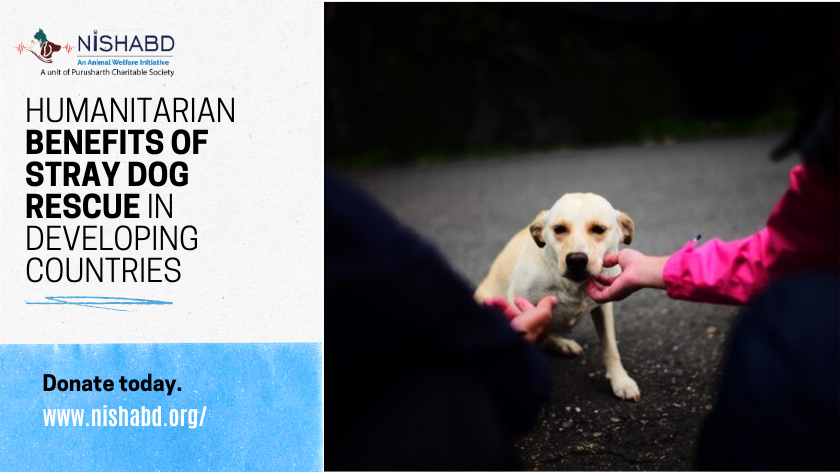
Humanitarian Benefits of Stray Dog Rescue in Developing Countries

Humanitarian Benefits of Stray Dog Rescue in Developing Countries

Stray Dog RescueIn the heart of developing countries, where bustling streets and vibrant communities coexist with challenges, a silent yet resilient population struggles for survival – stray dogs. While it’s a familiar sight, their plight often goes unnoticed amidst the relentless urban pace. But rescuing these dogs carries a profound humanitarian impact that transcends the boundaries of compassion.

Unearthing the Humanitarian Benefits

  • An Act of Compassion: Stray dog rescue is an act of compassion[1]. It reflects a society’s kindness and empathy towards the most vulnerable. In a world that often overlooks their struggles, rescue efforts become a beacon of hope for these animals, demonstrating that humanity’s heart is big enough to embrace all living creatures.
  • Reducing Suffering: Stray dogs endure a life fraught with suffering. From hunger and disease to the dangers of the street, their existence is marked by constant hardship. By rescuing them, we reduce this suffering and create a chance for a better life, not only for the dogs but for the community as well.
  • Promoting Health and Hygiene: Stray dogs are often carriers of diseases, posing a risk to themselves and the community. Rescue efforts not only offer medical care to these animals but also contribute to the overall health and hygiene of the area. By addressing this concern, rescue initiatives indirectly protect human health.
  • Enhancing Safety: Stray dogs can sometimes become a safety concern in communities. By rescuing and rehabilitating these animals, we make neighborhoods safer for residents, especially children at a higher risk of dog-related incidents.
  • Empowering Communities: Stray dog rescue projects frequently engage with local communities, fostering a sense of responsibility, compassion, and unity. These efforts unite people for a common cause, creating a sense of pride and achievement that resonates far beyond animal welfare.

“The greatness of a nation and its moral progress can be judged by the way its animals are treated.” – Mahatma Gandhi

The humanitarian benefits of rescuing stray dogs in developing countries extend beyond just caring for animals. It reflects a society’s values and commitment to fostering a world where kindness and compassion are not limited to humans but are extended to all living beings. Stray dog rescue becomes a powerful statement proclaiming that even in the face of adversity and scarcity, the human spirit can rise, carrying the hopes of a few four-legged friends and the dreams of a more humane world.

The Ripple Effect of Stray Dog Rescue

Rescuing stray dogs transforms the lives of these animals and has a ripple effect that touches upon various aspects of society.

  • Health and Hygiene: Stray dogs are often carriers of diseases, and their presence can lead to health hazards in communities. By rescuing them, organizations can significantly contribute to disease control.
  • Community Engagement: Stray dog rescue often involves working closely with local communities. This engagement can enhance a sense of unity and responsibility. It encourages people to take ownership of their neighborhood and its issues.
  • Education: Stray dog rescue projects frequently integrate educational components, especially among children. They learn about empathy, animal welfare, and the significance of coexisting harmoniously with animals.

“The love for all living creatures is the most noble attribute of man.” – Charles Darwin

Stray Dogs as Companions

In the developed world, adopting a dog is a common practice. Dogs serve as not only companions but also protectors and helpers. But in developing countries, many stray dogs are without a loving home.

  • Education and Compassion: By rescuing stray dogs, communities teach the values of compassion and empathy. This education extends to treating all animals and reflects a society that cares not only for its own but also for its four-legged friends.
  • A Sense of Responsibility: Stray dog rescue fosters a sense of community responsibility. It unites residents for a common cause, allowing them to collaborate to improve their area.
  • Societal Progress: Through stray dog rescue, societies step forward, not just in terms of animal welfare but in overall progress. They illustrate that their values are rooted in kindness and empathy, even in adversity.
    “Until one has loved an animal, a part of one’s soul remains unawakened.” – Anatole France

Stray Dogs as Teachers

Stray dogs can be teachers, imparting valuable life lessons. They teach us about resilience, adaptability, and the beauty of the human-animal bond.

  1. Resilience: Stray dogs endure a challenging life filled with uncertainty. Their resilience in the face of adversity is an inspiration.
  2. Adaptability: Stray dogs adapt to ever-changing environments and can thrive with minimal resources. This quality is a testament to their tenacity.
  3. Human-Animal Bond: The bond formed between rescuers and stray dogs is a testament to the indomitable spirit of these animals. This relationship is built on trust, love, and shared experiences.
    “The world would be a nicer place if everyone could love as unconditionally as a dog.” – M.K. Clinton

Stray Dog Rescue Hope for a Better World

Rescuing stray dogs is not just about saving a few animals; it’s about creating a better world. It’s a humanitarian effort that extends beyond borders, language, and culture. It represents the innate kindness of humanity, a kindness that doesn’t discriminate between species. In developing countries, where the struggle for survival is a shared experience, rescuing stray dogs is a testament to the strength of compassion in the face of adversity. It symbolizes hope, a beacon of light that showcases our capacity to make the world better for all humans and animals.

“Saving one dog will not change the world, but surely for that one dog, the world will change forever.” – Karen Davison

Read our Article: Stray Animals Are A Social Responsibility: Caring for Our Furry Neighbors